SINCE 1957
Rider's pride

SINCE 1957
Rider's pride
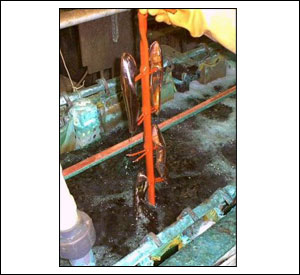
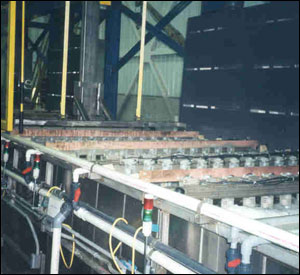
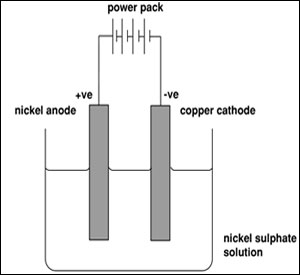
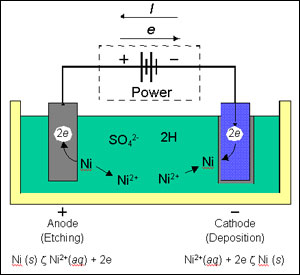
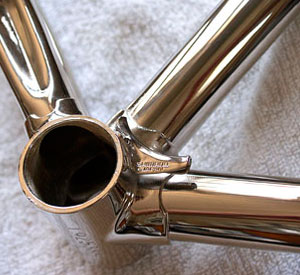
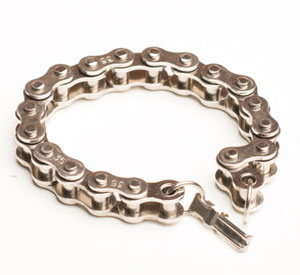
The Nickel plating process is the most common used in the plating industry. Bright nickel plating, as it is commonly referred to, is the process of an electrolytic deposition of a layer of nickel on a substrate. This is done through electrolyzing the anode (metallic nickel) and the cathode (the part) with DC current. Direct current is applied between the Anode (positive) and cathode (negative) by way of a rectifier. The rectifier transforms AC current into DC current. The panel controls the rectifier and amperage based on the size of the parts in the tank and the number of parts in the tank. Nickel salts provide the conductivity between the electrodes. The nickel salts provide the nickel metal being deposited to the parts, while the nickel anode replenishes the nickel ion to the solution. This enables the nickel plating solution to be used for long periods with out having to make large chemical additions.
Electrochemical is our most critical process for depositing a thin layer of metal on, usually, a metallic base. Objects are electroplated to prevent corrosion, to obtain a hard surface or attractive finish, to purify metals (as in the electro-refining of copper), to separate metals for quantitative analysis, or, as in electrotyping, to reproduce a form from a mold., chromium & nickel, are the metals most often used in our plating plant.
In the process of electroplating, the object to be coated is placed in a solution, called a bath, of a salt of the coating metal, and is connected to the negative terminal (Cathode) of an external source of electricity. Another conductor, often composed of the coating metal, is connected to the positive terminal (Anode) of the electric source. A steady direct current of low voltage, usually from 1 to 12 V, is required for the process. When the current is passed through the solution, atoms of the plating metal deposit out of the solution onto the cathode, the negative electrode. These atoms are replaced in the bath by atoms from the anode (positive electrode). In either case an equilibrium between the metal coming out of solution and the metal entering is maintained until the object is plated. An appropriate deposit of the metal on the products is required according to requirement which can be verified & checked in our Laboratory batch wise.