SINCE 1957
Rider's pride

SINCE 1957
Rider's pride
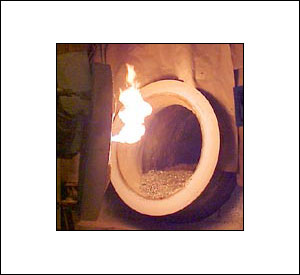
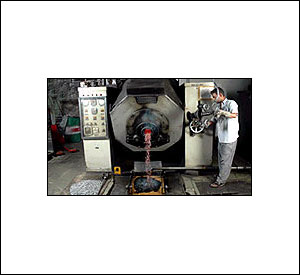
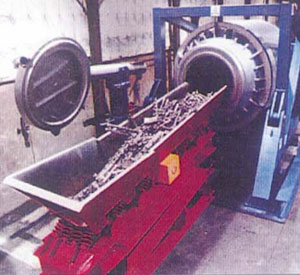
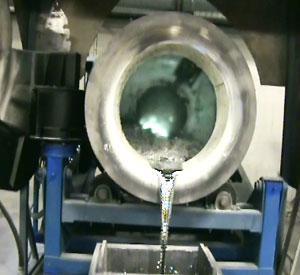
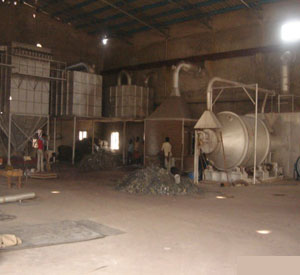
Some of our Pedal & other Components requires Heat Treatment which is a very critical process for quality products. To avoid Quality/Hardness/Profile variation, we installed our own Heat Treatment Plant with all additional features & accessories. The criticality in heat treatment is Hardness, Strains, Case Depth, Profile & Grains, which is given to our Q.C. Cell lot-wise/batch-wise for proper inspection in the Standard Room consist of Hardness Taster, Micro Scope Etc.
The basic process of hardening steel by heat treatment consists of heating the metal to a temperature at which austenite is formed, usually about 760° to 870° C (about 1400° to 1600° F) and then cooling, or quenching, it rapidly in water or oil. Such hardening treatments, which form a profile, set up large internal strains in the metal, and these are relieved by tempering, or annealing, which consists of reheating the steel to a lower temperature. Tempering results in a decrease in hardness and strength and an increase in ductility and toughness.
The primary purpose of the heat-treating process is to control the amount, size, shape, and distribution of the cementite particles in the ferrite, which in turn determines the physical properties of the steel.
Many variations of the basic process are practiced. Metallurgists have discovered that the change from austenite to martensite occurs during the latter part of the cooling period and that this change is accompanied by a change in volume that may crack the metal if the cooling is too swift. Three comparatively new processes have been developed to avoid cracking. In time-quenching the steel is withdrawn from the quenching bath when it has reached the temperature at which the martensite begins to form, and is then cooled slowly in air.
Other methods of heat treating steel to harden it are used. In case hardening, a finished piece of steel is given an extremely hard surface by heating it with carbon or nitrogen compounds. These compounds react with the steel, either raising the carbon content or forming nitrides in its surface layer. In carburizing, the piece is heated in charcoal or coke, or in carbonaceous gases such as methane or carbon monoxide. Cyaniding consists of hardening in a bath of molten cyanide salt to form both carbides and nitrides. In nitriding, steels of special composition are hardened by heating them in ammonia gas to form alloy nitrides.