SINCE 1957
Rider's pride

SINCE 1957
Rider's pride
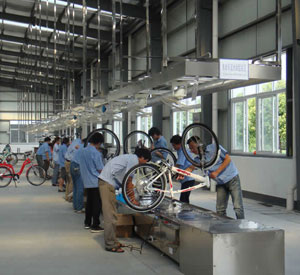
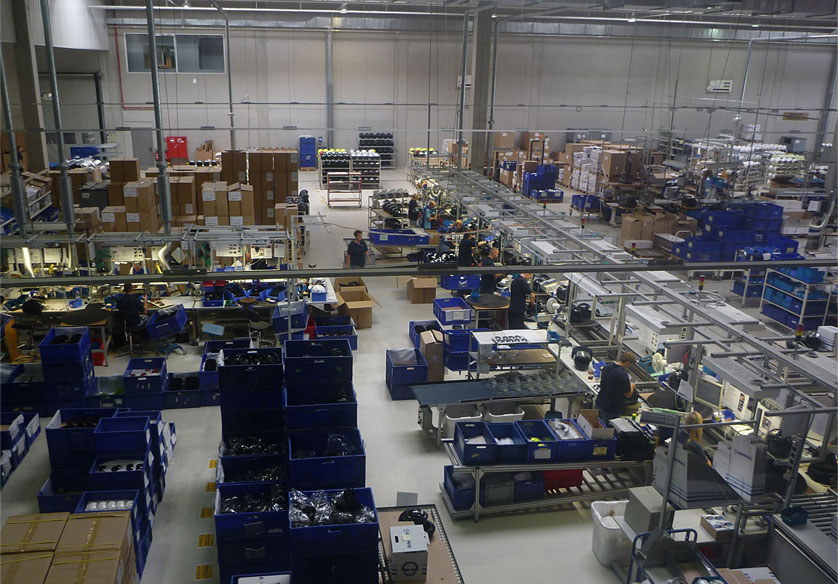
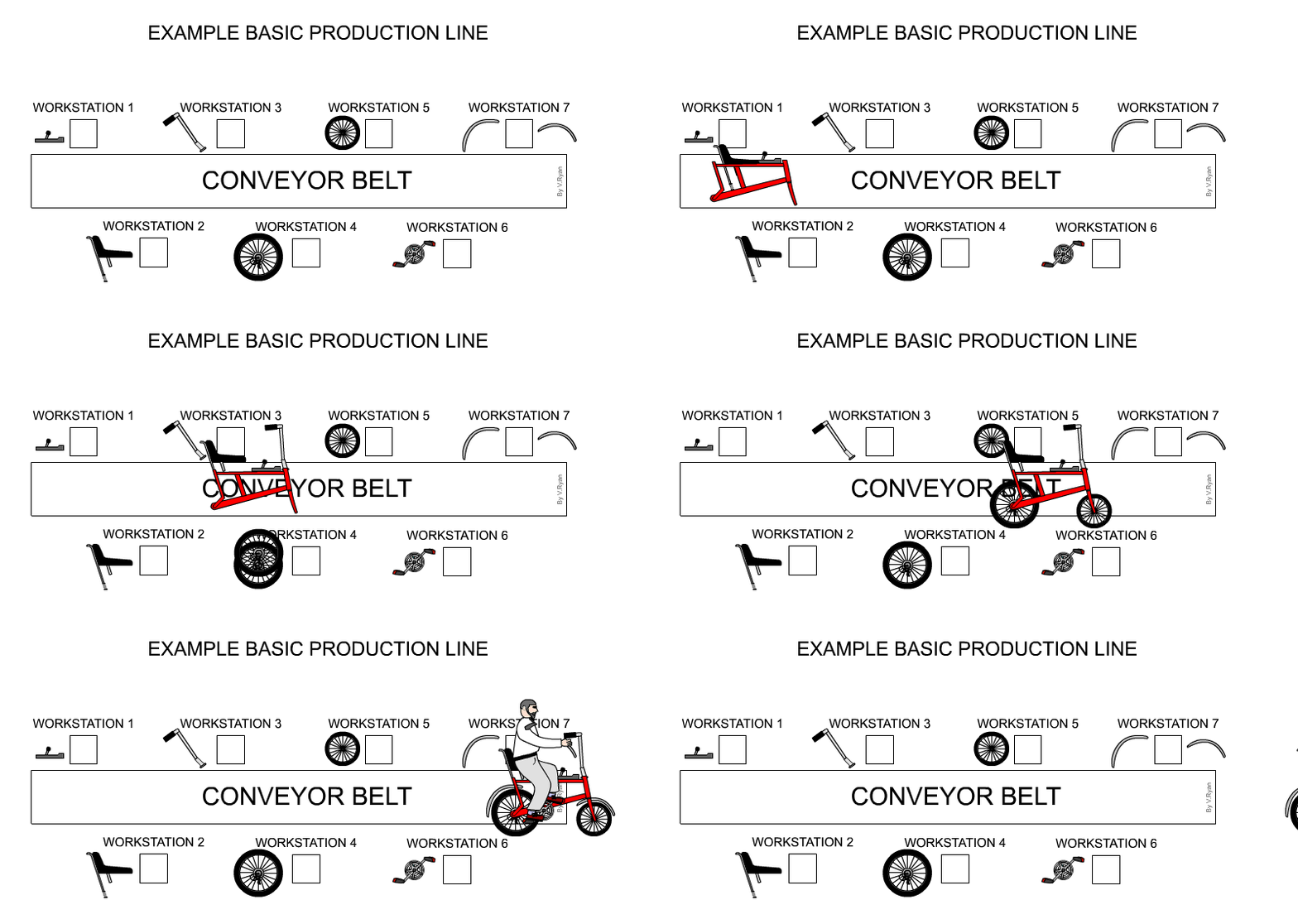
An assembly line is a manufacturing process (most of the time called a progressive assembly) in which parts (usuallyinterchangeable parts) are added as the semi-finished assembly moves from work station to work station where the parts are added in sequence until the final assembly is produced. By mechanically moving the parts to the assembly work and moving the semi-finished assembly from work station to work station, a finished product can be assembled faster and with less labor than by having workers carry parts to a stationary piece for assembly.
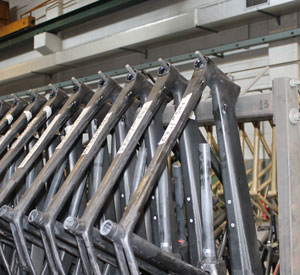
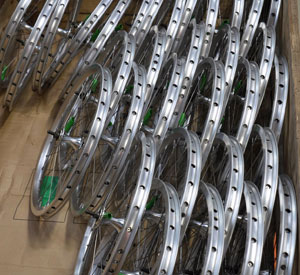
Assembly lines are the common method of assembling complex items such as Bicycle Assembly, Chaniwheel Assembly, B-Carton Kits, Brake Assembly & Pedal Assembly.
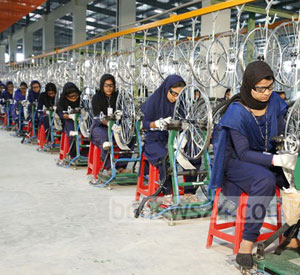
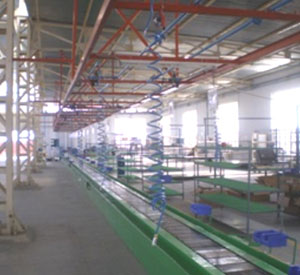
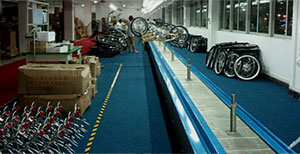
Our Assembly lines is designed for the sequential organization of workers, tools or machines, and parts. The motion of workers is minimized to the extent possible. All parts or assemblies are handled either by conveyors or motorized vehicles such as fork lifts, or gravity, with no manual trucking. Heavy lifting is done by machines such as overhead cranes or fork lifts. Each worker typically performs one simple operation.
The principles of assembly are these:
(1) Place the tools and the men in the sequence of the operation so that each component part shall travel the least possible distance while in the process of finishing to deliver the material on time to customers.
(2) Use work slides or some other form of carrier so that when a workman completes his operation, he/she drops the part always in the same place—which place must always be the most convenient place to his/her hand—and if possible have gravity carry the part to the next workman for his own.
(3) Use sliding assembling lines by which the parts to be assembled are delivered at convenient distances.